
Bookkeeping is crucial for property management just like for any other business. Whether you manage a single property or an entire portfolio, maintaining accurate financial records is necessary to ensure that you can make informed decisions, meet tax obligations, and keep your business running smoothly.
In this blog post, we’ll explore bookkeeping essentials for property management, including tips, best practices, and tools that can streamline your financial processes.
Why Bookkeeping Matters for Property Management Business
Bookkeeping is essential for property management businesses. It ensures accurate financial tracking, accurate decision-making and better cash flow management.
Effective bookkeeping helps to:
- Track Income and Expenses: When you are running any business you need to know exactly how much you are earning and how much you are spending. This helps to cut unnecessary costs and maximizes profitability.
- Stay Tax Compliant: Compliance with taxes is the pain point for most businesses. In order to pay taxes your financial records should be current and up to date. That’s how you can claim deductions and maximize your profits.
- Manage Cash Flow: Cash is the backbone for survival. Proper bookkeeping prevents cash flow issues by helping you anticipate upcoming expenses and manage rent payments.
- Identify Profitable Properties: Well-maintained financial records will enable you to evaluate which properties are performing well and which are not. Then you can dig deep and analyze the details of expenses to optimize future margins.
How We Can Help- XquisiteBooks
If you are looking for a reliable bookkeeping solution, we can help. At XquisiteBoooks, we will take care of bookkeeping for your property management. Whether it is raising invoices, recording bills, journal entries, or bank reconciliation, we will cover all.
We understand the unique challenges of property management, and we’re committed to providing you with the highest level of service. Let us take care of your bookkeeping needs, so you can concentrate on growing your business and maximizing your property investments.
Schedule a meeting today to discuss your bookkeeping needs!
What are the Key Accounts Every Property Bookkeeper Should Track
Each business has unique needs and so is the case with property management business. This changes the overall focus according to the bookkeeping point of view. For property management, the accounts below require more focus as compared to other businesses:
- Rental Income: It is the main source of income for property landlords and the bookkeeping focus will be on recording rent payments, tracking late fees, or any other additional income like laundry, parking fees, or pet rent.
- Operating Expenses: Key operating expenses include utilities, maintenance, insurance, and management fees. Keeping these costs organized allows for easy budgeting and analysis.
- Property Repairs and Maintenance: Repair and maintenance is also common expenses whether minor fixes or significant repairs, it’s essential to document every expense for tax deduction purposes and future planning.
- Security Deposits: Security deposits are liabilities that need to be kept separate from other incomes until they are returned or used for damages.
- Mortgage Payments: If your properties are financed, tracking mortgage payments (principal and interest) helps with cash flow management and understanding property profitability.
- Property Taxes: Taxes are obligations that need to be settled on time. It is important to account for property taxes, ensuring they are paid on time and correctly reported to avoid any penalties or non-compliance.
What are the Best Practices for Property Management Bookkeeping
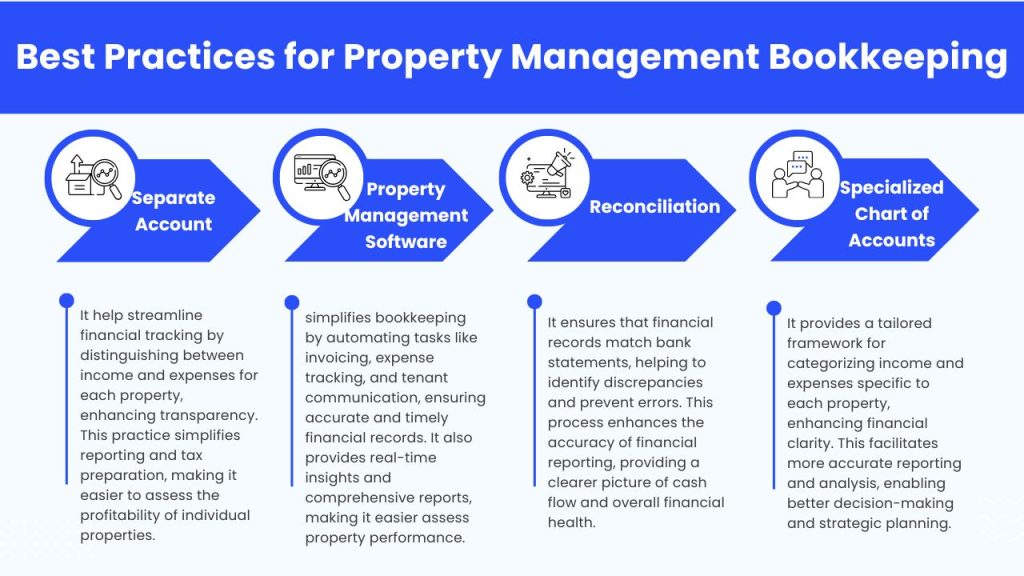
Separate Personal and Business Accounts
This is the best practice for any business. If you own a property personally but manage it as a business, it’s crucial to keep personal and business expenses separate. Mixing expenses can make it harder to manage bookkeeping, can increase the risk of missed deductions, and could lead to legal or tax issues.
Use Property Management Software
Manual bookkeeping can be time-consuming, complex, and can be prone to errors, especially for property managers with multiple properties. Using property management or accounting software like QuickBooks, Entrata, or AppFolio you can streamline your bookkeeping, including rent tracking, tenant communication, and financial reporting.
Reconcile Bank Statements Monthly
First, create a list of all bank accounts of your business then adopt a habit of reconciling each bank accounts for each month. This practice will ensure your financial records match with your bank statements and discrepancies can be identified on time.
Create a Specialized Chart of Accounts
Chart of accounts is the backbone for financial reporting. Establishing a clear chart of accounts is crucial for staying organized. Your chart of accounts should include categories and subcategories for all income, expenses, liabilities, assets, and equity accounts. Customize these categories to reflect the specific needs of your property management business so you would be able to see better insights in form of financial reports.
What are Common Bookkeeping Mistakes and How to Avoid them?
Not Keeping Receipts
In today’s age of digital banking, no one cares about keeping receipts. Well, no doubt digital banking has made life easy, and it helps to track payments, but you still need to maintain detailed receipts for expenses. So, it’s important to keep the physical copies and scan them digitally, as they are crucial for tax filing, audits, and accurate record-keeping.
Ignoring Late or Partial Payments
When tenants are late with rent or only make partial payments, it can create cash flow problems for your business. Set a standard payment date for all tenants and send a payment reminder three days before the due date. Make sure to track when payments are late and calculate any associated fees accurately.
Not Planning for Capital Expenditures
Big-ticket expenses, such as roof repairs or HVAC replacements, should be planned for. It’s best to set an annual budget for such expenses. Not setting aside funds for these expenditures can cause financial strain and cash flow difficulty. That’s why having a capital expenditure budget is the key.
Not Taking W-9 and Filing 1099 Forms
If you hire contractors for maintenance, repairs, or other services, you’ll need to submit 1099 forms for tax purposes. Most business owners don’t file 1099 and some even don’t know what the threshold is for filing 1099.
If the annual payment exceeds $600, you must take the W-9 forms from your contractors which contain their particulars such as SSN, EIN, and other details, and file the 1099 form for each contractor.
How to Automate Bookkeeping Processes Using QuickBooks
QuickBooks Online allows you to achieve automation, making tour finances a lot easier.
- Automated Recurring Invoices Payments: Set up recurring invoices and QuickBooks will send invoices for fixed amounts to your tenants at a chosen date each month.
- Payment Reminders: Set up automatic payment reminders for tenants in QuickBooks online. You can type a default message that will be sent by QuickBooks whenever the amount is due.
- Expense Tracking: Automatically import expenses from the bank feeds section. First, you must connect your bank with QuickBooks online and then all transactions will be downloaded into the bank feed section from where you can categorize and book the transactions.
- Financial Reporting: Generate profit and loss statements, balance sheets, and cash flow reports instantly for each property, allowing for real-time analysis.
Conclusion
Bookkeeping for property management requires diligence, organization, and attention to detail. By tracking your income and expenses accurately, staying on top of tax obligations, and leveraging accounting software like QuickBooks, you can ensure the long-term success of your property management business. Implementing the best practices today will save you time and money tomorrow.

Hi, I am Basit. One of guys behind XquisiteBooks. I have been in accountancy and finance profession since last 7 years and have worked in many organizations on different executive roles. Whether its bookkeeping, financial analysis, accounts receivable, accounts payable or working with general ledgers, I have served the finance industry and gained in-depth knowledge and exposure in my domain.
If you want to know more about me or our team, check out the about us page.